Define what must stay outside
Begin with the exposure, not the product category. Wind-driven snow, rain, splashes, dust and accidental immersion are different demands. Identify when the case will be open as well as when it will be closed. A highly protective enclosure offers little help if its contents are routinely exposed during a long search at a stop.
Write down the consequence of failure for each item. Damp spare cord is not the same problem as water entering a communications device. Critical equipment may justify separate protective layers, duplicated capability or a different carrying position. Those decisions belong in the wider expedition plan, not solely in a shopping comparison.
Read a rating as a test description
IEC 60529 defines the IP Code for enclosure protection. The first characteristic numeral concerns access to hazardous parts and solid foreign objects; the second concerns water. A marked rating describes specified test conditions for the enclosure, not a promise that every possible field exposure has been covered. Ask for the manufacturer’s documentation for the exact model and configuration.
IPX7 concerns temporary immersion under standardised conditions. IPX8 concerns continuous immersion under conditions specified by the manufacturer within the standard’s framework. Do not invent a universal depth or duration for an IPX8 label. Also, do not assume an immersion rating establishes resistance to every water-jet test. An X means a characteristic numeral is not specified; it should not be read as a zero.
Other references answer different questions. NEMA 250 enclosure types are not a simple one-to-one replacement for IP codes. A broad “MIL-STD-810H tested” statement needs the actual methods, procedures and results to become useful. None of these labels alone establishes suitability for your lowest operating temperature or the complete packed load.
Inspect the parts that actually close
Check that the gasket is seated, continuous and free of grit, hair, ice and fabric. Inspect hinges and latch attachment points for damage. Close the case according to its instructions and confirm that each latch engages completely. Avoid forcing a stiff mechanism: ice, internal pressure or an obstructed seal may need attention first.
A pressure-equalisation valve can help manage pressure differences, but it is not a heater and does not eliminate condensation. Learn how the specific valve works and whether it requires maintenance. Do not block it, alter it or assume that an aftermarket fitting preserves the original ingress rating. Cable pass-throughs and replacement hardware need their own compatibility checks.
Make the interior do useful work
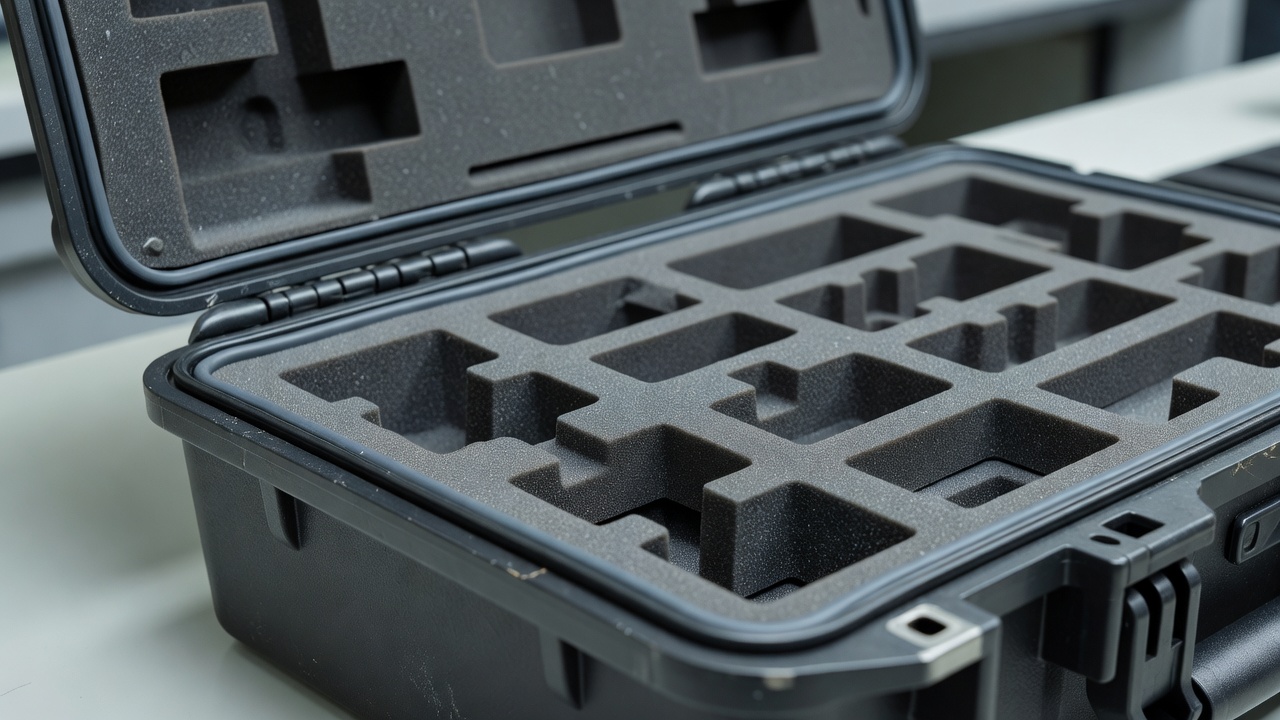
Fit should prevent equipment from moving into damaging contact without imposing crushing loads. Allow clearance around switches, connectors and fragile protrusions. A foam insert should support the item deliberately rather than merely produce a tidy outline. Check whether the foam retains moisture and how you will dry or replace it after exposure.
Removable pouches can be easier to revise than custom foam, especially when contents change between trips. Dividers keep small parts visible, while protected terminal covers reduce the chance of loose conductive objects contacting batteries. Do not put leaking liquids, unprotected blades and sensitive electronics into a shared compartment simply because the lid closes.
Test cold handling without damaging equipment
Confirm the manufacturer’s operating and storage temperature limits for the shell, latch and seal materials. Some plastics and flexible components change behaviour in cold conditions. A room-temperature opening test cannot establish low-temperature durability. Never improvise a destructive test with critical equipment packed inside.
Practise with your actual gloves in controlled conditions that remain within the product’s limits. Check latch reach, opening force, carrying grip and the space needed to remove the first item. If a closure repeatedly requires bare fingers, revise the system rather than accepting exposed hands as the normal workflow.
Keep an inspection record
Record the case model, relevant ratings, replacement seal details and observed faults in your equipment notes. Inspect after impacts and before each trip; retire or repair damaged components according to manufacturer guidance. Any wet test should follow safe product instructions, with vulnerable contents removed. A successful home test is not certification.
Finally, connect enclosure choice to temperature management. A watertight case can still contain moist air, and its contents can still become too cold. Protection works best when the packing order reduces unnecessary openings and the team understands what the enclosure can and cannot do.