Start with the hand that opens the pack
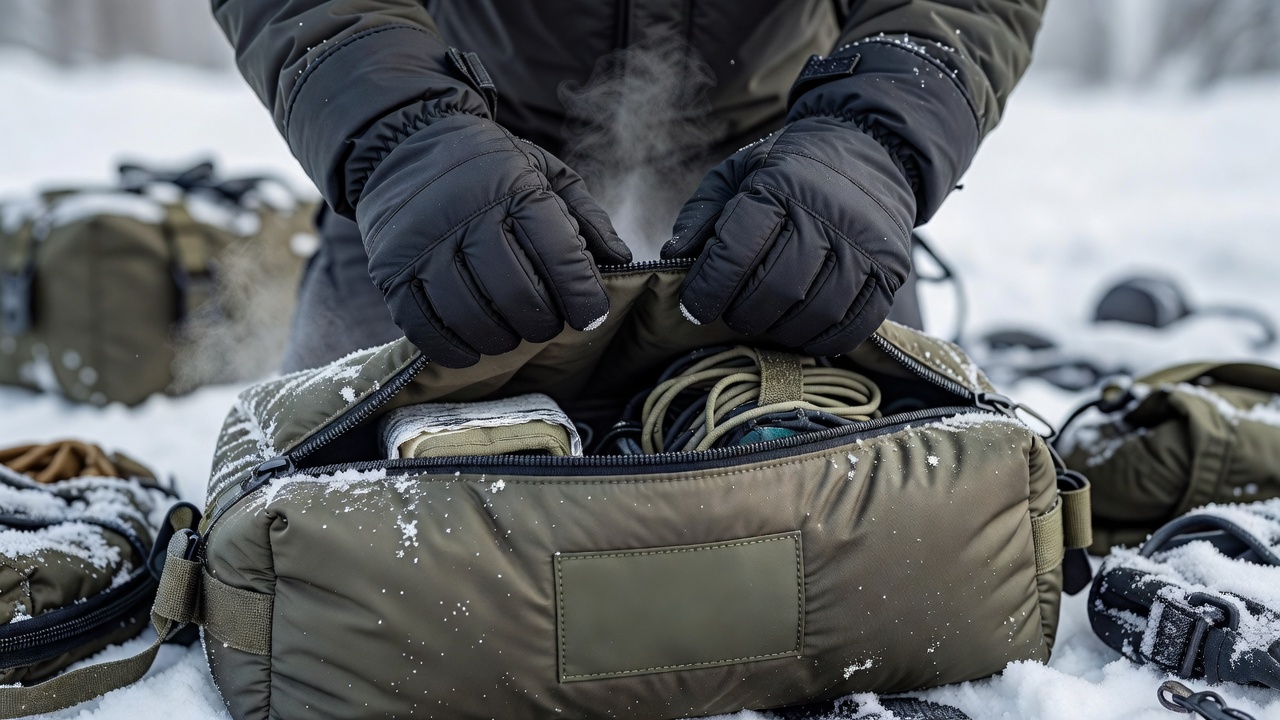
Choose a routine retrieval task and perform it with the gloves or mitts you expect to use. Find the label, release the restraint, open the container, remove the item and close everything again. Count the places where fine dexterity is required. A small zipper pull, recessed latch or tightly packed sleeve can be a larger obstacle than the container’s weight.
Suitable pull extensions may improve handling, but they can also snag or interfere with closures. Test any modification against the product instructions and actual load. Keep loops away from moving equipment and do not alter safety-critical mechanisms. The aim is predictable operation, not adding straps to every available point.
Give wet equipment a different route
Snow carried inside a warm enclosure can become liquid water. Brushing loose snow away before opening and returning equipment is therefore part of the packing sequence. Identify where used gloves, damp straps and wet shelter components will go. A labelled wet-return pouch can prevent a convenient empty compartment from becoming the accidental home of soaked equipment.
Dry reserves need a separate barrier and a deliberate opening rule. Avoid repeatedly opening the main dry reserve to reach a small routine item. If the system contains wet and dry modules, label their purpose in words and use different physical locations. A sealed bag containing wet equipment is containment, not drying; plan how moisture will actually be removed when conditions allow.
Understand what insulation can do
Insulation slows heat transfer between contents and surroundings. Without a suitable heat source, an insulated container will eventually approach the surrounding temperature. Its useful protection depends on initial temperature, insulation, contents, openings and exposure duration. There is no dependable universal “hours of protection” figure for a homemade pouch or an unspecified insulated crate.
List each vulnerable item’s permitted storage and operating range from its manufacturer or appropriate professional guidance. Medicines require advice from a pharmacist or clinician; do not treat a general equipment guide as a storage prescription. Adhesives, water-based products and certain displays may also have limits that differ from the durable shell around them.
Separate battery storage from charging
Battery performance and charging limits depend on chemistry and product design. Cold-related reduction in available performance should be included in your power planning, not solved by assuming an insulated bag will keep every battery warm. Protect terminals from conductive objects, restrain spare cells and keep damaged or swollen batteries out of service according to manufacturer instructions.
Many lithium-ion products restrict charging below specified temperatures. Follow the exact battery and charger guidance, including any warming or temperature-verification requirements. A surface that feels warm is not proof that the cell is within its charging range. Do not apply an improvised heater, enclose a charging system without checking ventilation requirements or place batteries against an uncontrolled heat source.
Plan the transition into warmer air
Cold equipment can collect condensation when exposed to warmer, moist air. For suitable equipment, enclosing it in a dry, sealed barrier before entering warmer surroundings and allowing it to acclimatise before opening can reduce exposure. The appropriate sequence depends on the device and its instructions. Existing moisture sealed inside still needs attention.
Desiccant can help manage limited moisture in a closed space, but it has finite capacity. Use a suitable product, monitor or replace it as directed, and keep loose material away from equipment. It does not dry a soaked load instantly and should not be used to justify storing wet fabric with sensitive electronics.
Make labels survive the workflow
Use large, high-contrast words and short identifiers. Confirm that the chosen label material and adhesive are suitable for the container and expected conditions. Put essential identification where straps do not cover it, and protect a backup inventory from abrasion and moisture. A label that looks excellent on a dry table may become unreadable under frost or a headlamp reflection.
Keep the layout consistent across modules. If the identification sits on the lid’s upper-left area on one case, repeat that location where practical. Consistency lets another team member search a known position rather than interpret a new design each time. Include tactile distinctions where useful, without relying on a single cue.
Test the return, not just the retrieval
After using an item, put it back with the same gloves and restrictions. Check whether snow, stiffness or an overfilled pouch prevents closure. Repeated opening should not turn a neat initial pack into an unlabelled pile. Record any item that changes compartments during the drill and either revise its assigned home or correct the workflow.
Coordinate these observations with your module map and expedition rehearsal. Good organisation reduces avoidable handling, but it cannot eliminate frostbite, hypothermia, equipment failure or other environmental risks. Use suitable training, supervision and expedition-specific procedures alongside the storage system.